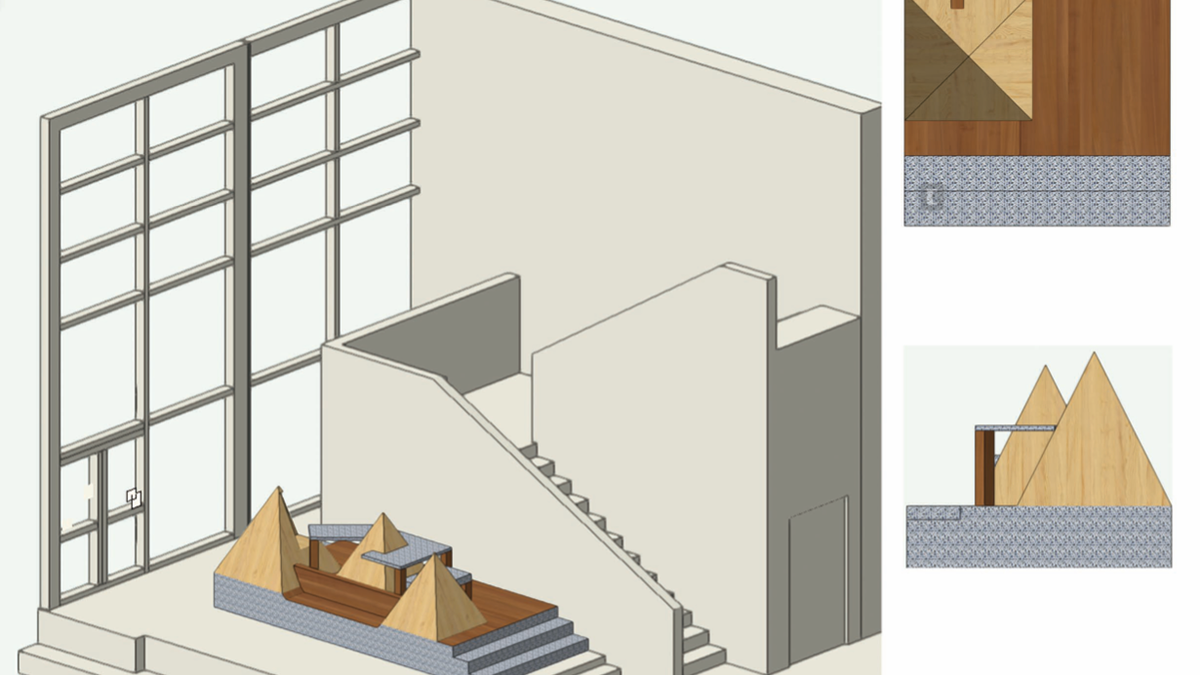
Phase 1
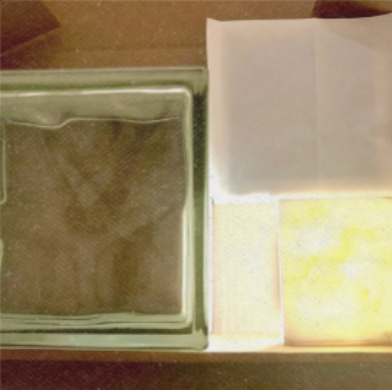
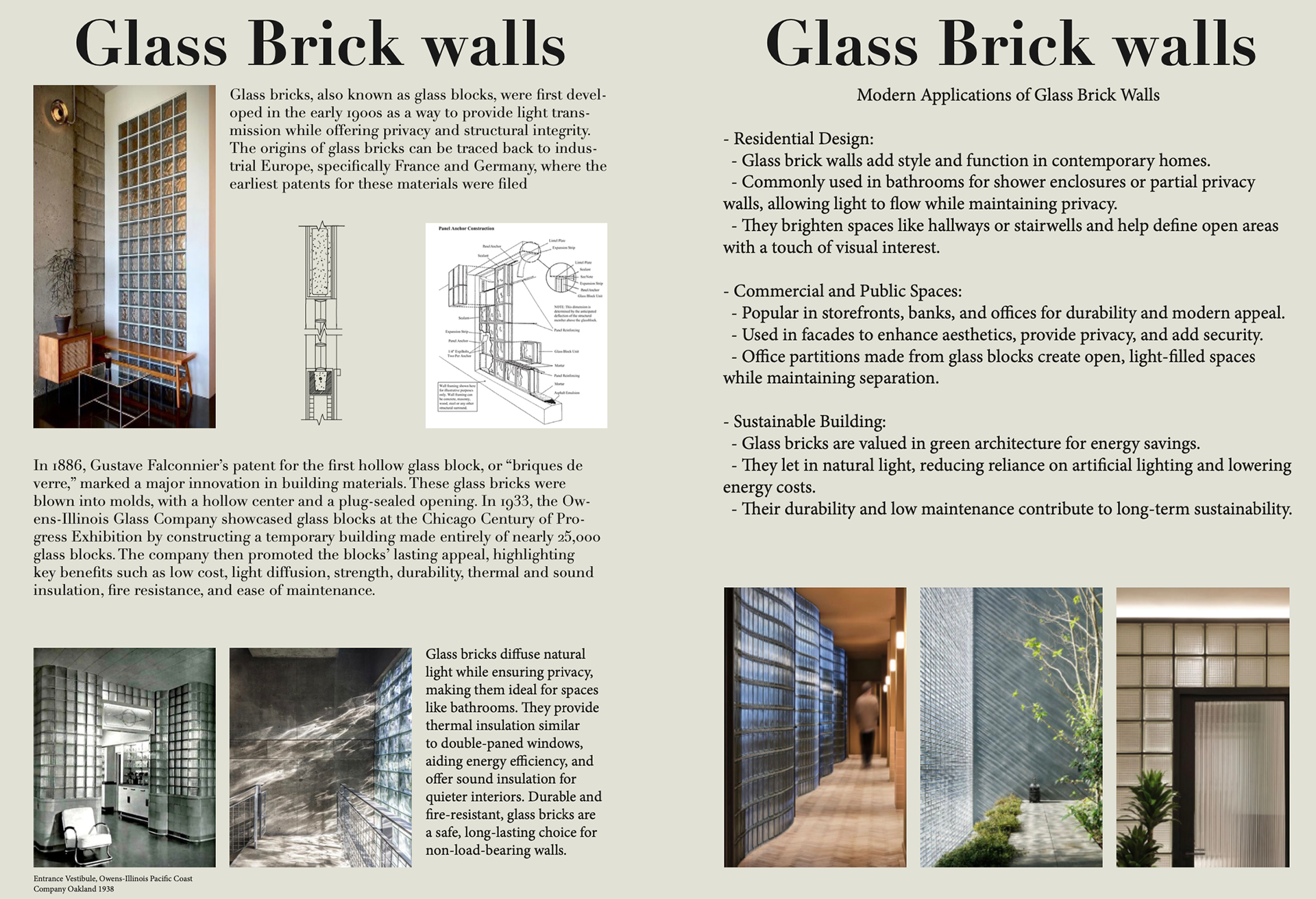
For my case study, I decided to examine interior walls and room separators, so I looked at different materials from different eras and cultures. I chose glass walls, which represented older interior design trends, due to their cultural significance and the technological advancements of their time.
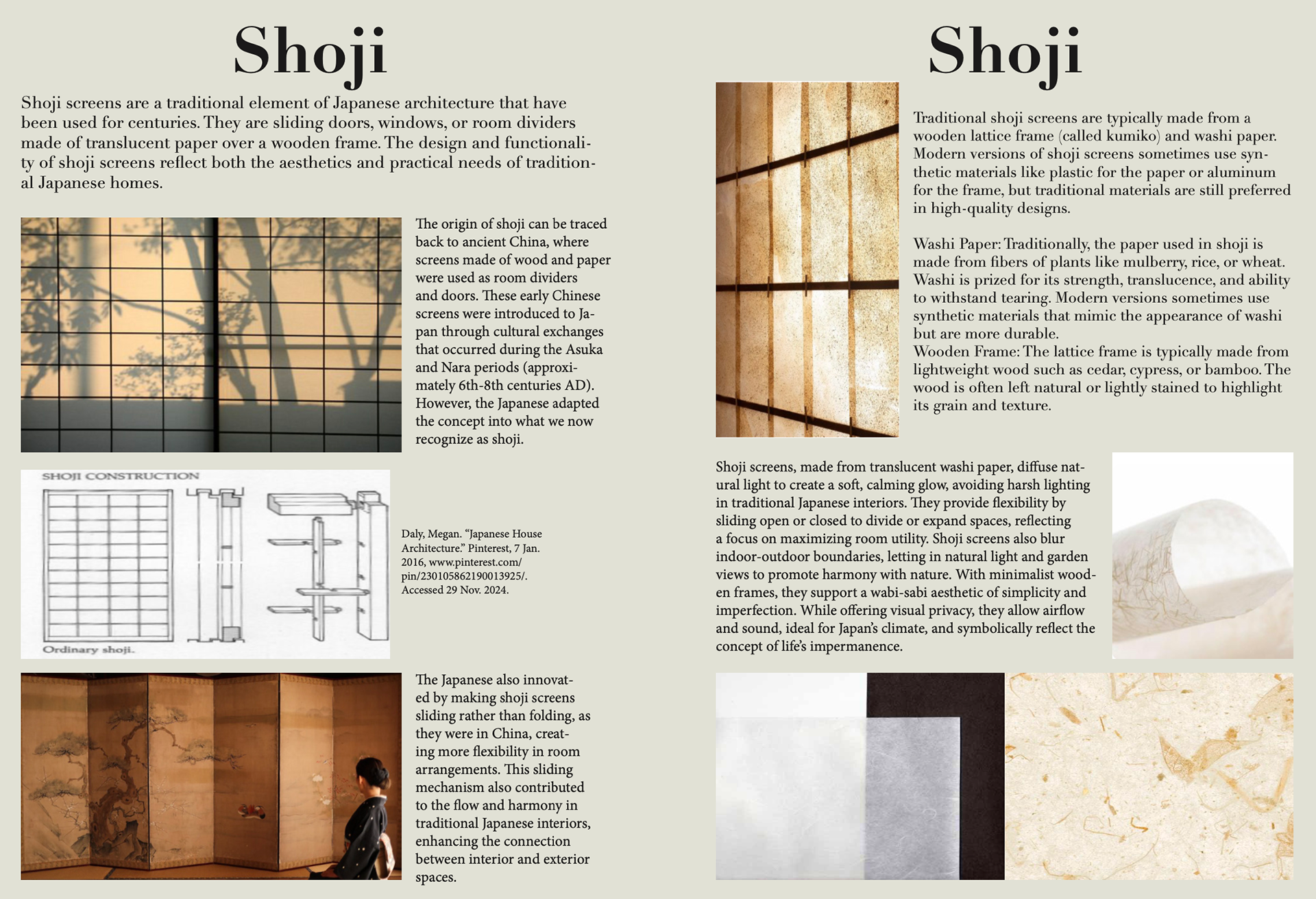
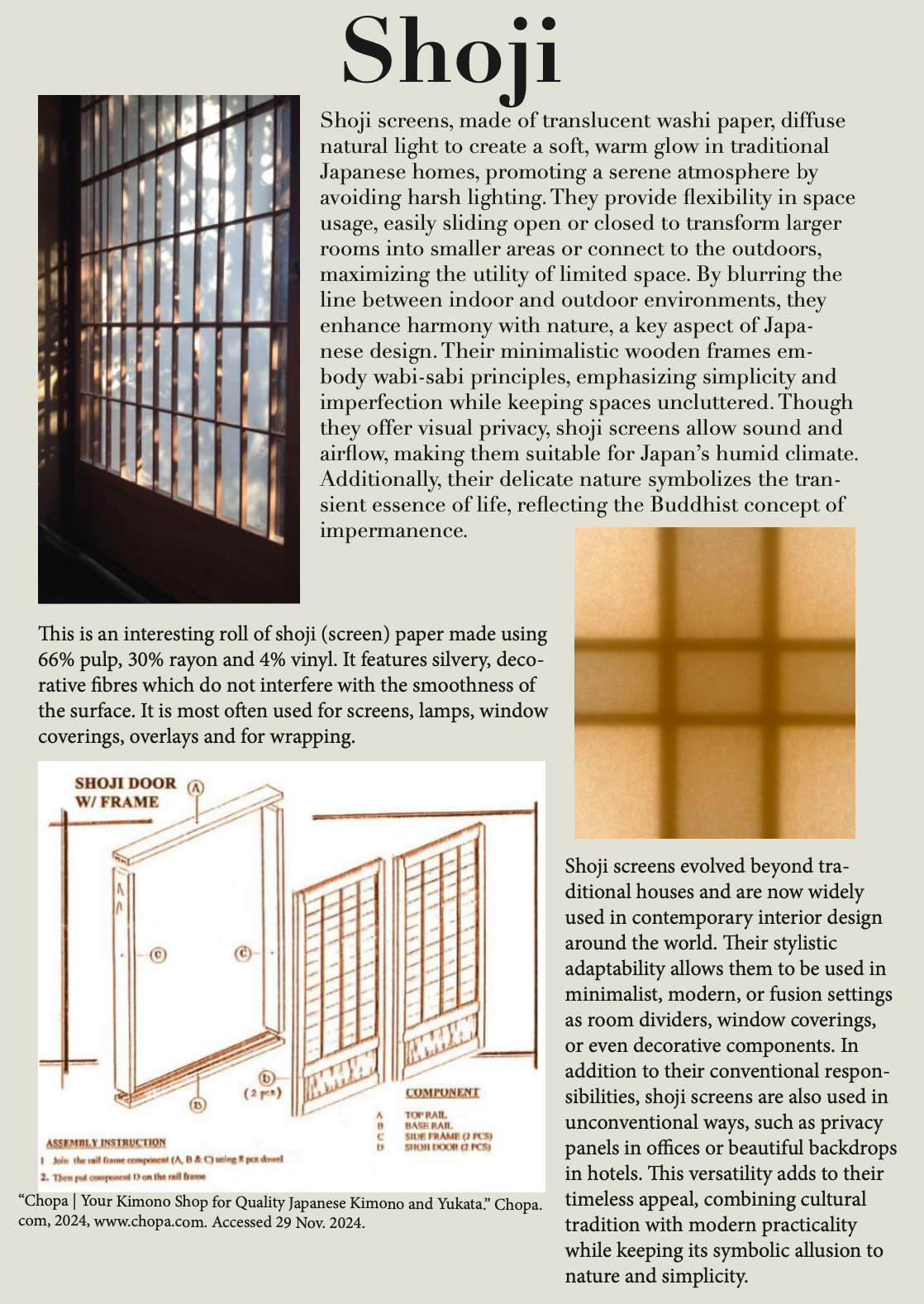
For the second interior wall, I delved into the cultural significance of shoji. This Japanese technique uses translucent paper and wood to create a privacy screen that still allows light to pass through. This exploration will enlighten you about the unique design principles of Japanese culture
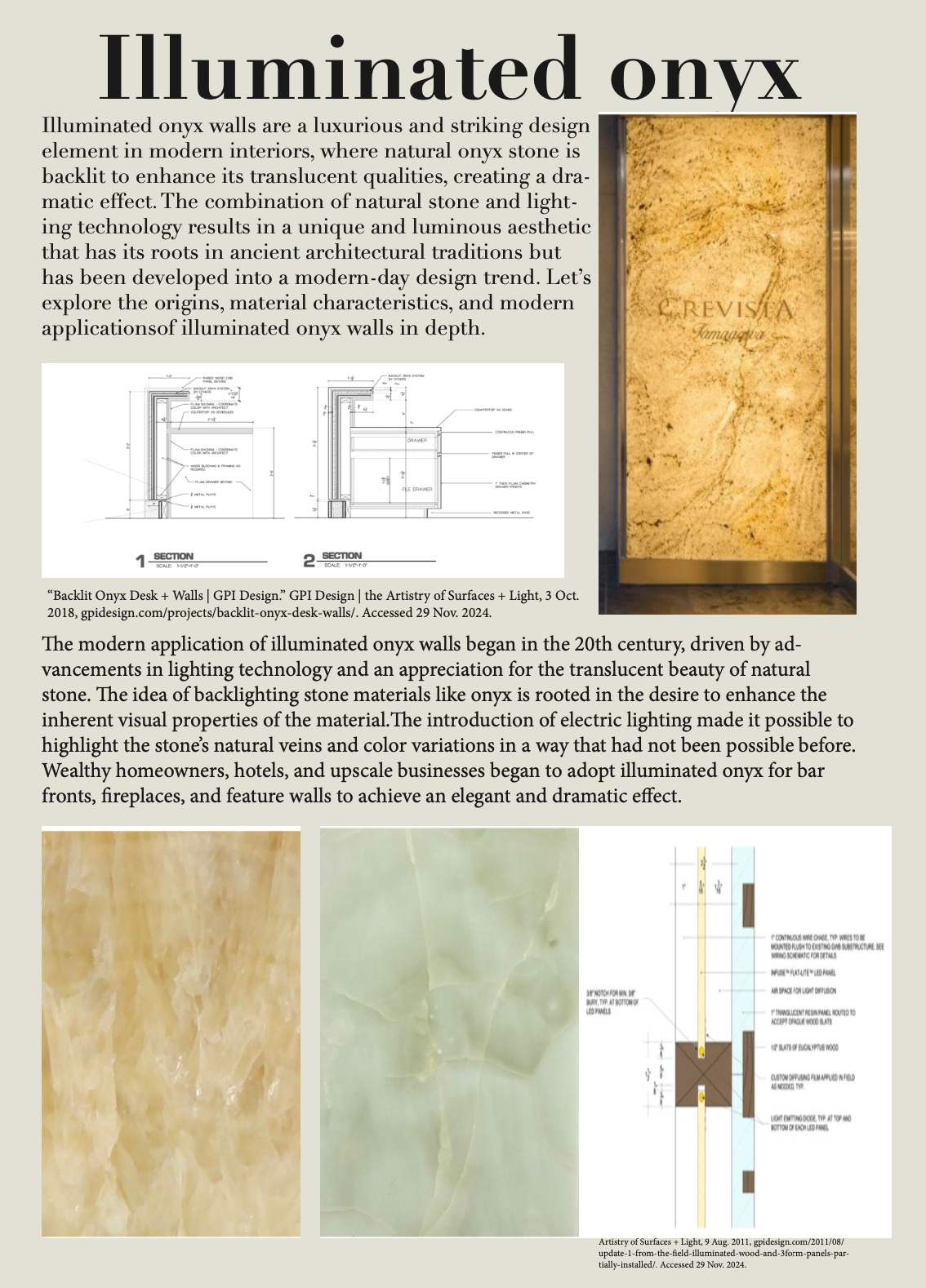
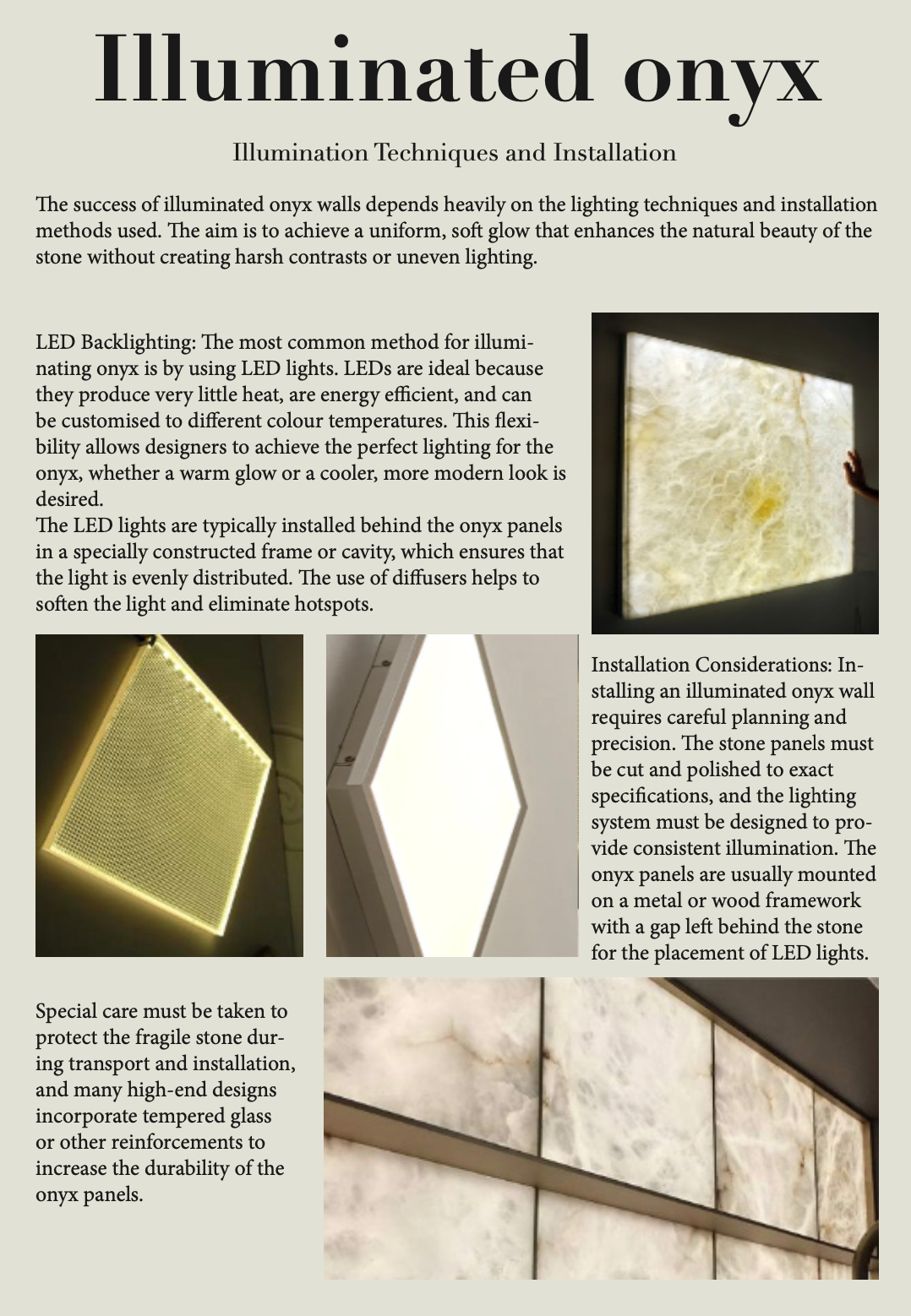
My last interior wall was illuminated with onyx walls. This modern creation, infused with technology, is made of onyx, a rare and luxurious material. This exploration will inspire you with the possibilities of contemporary design.
Phase 2
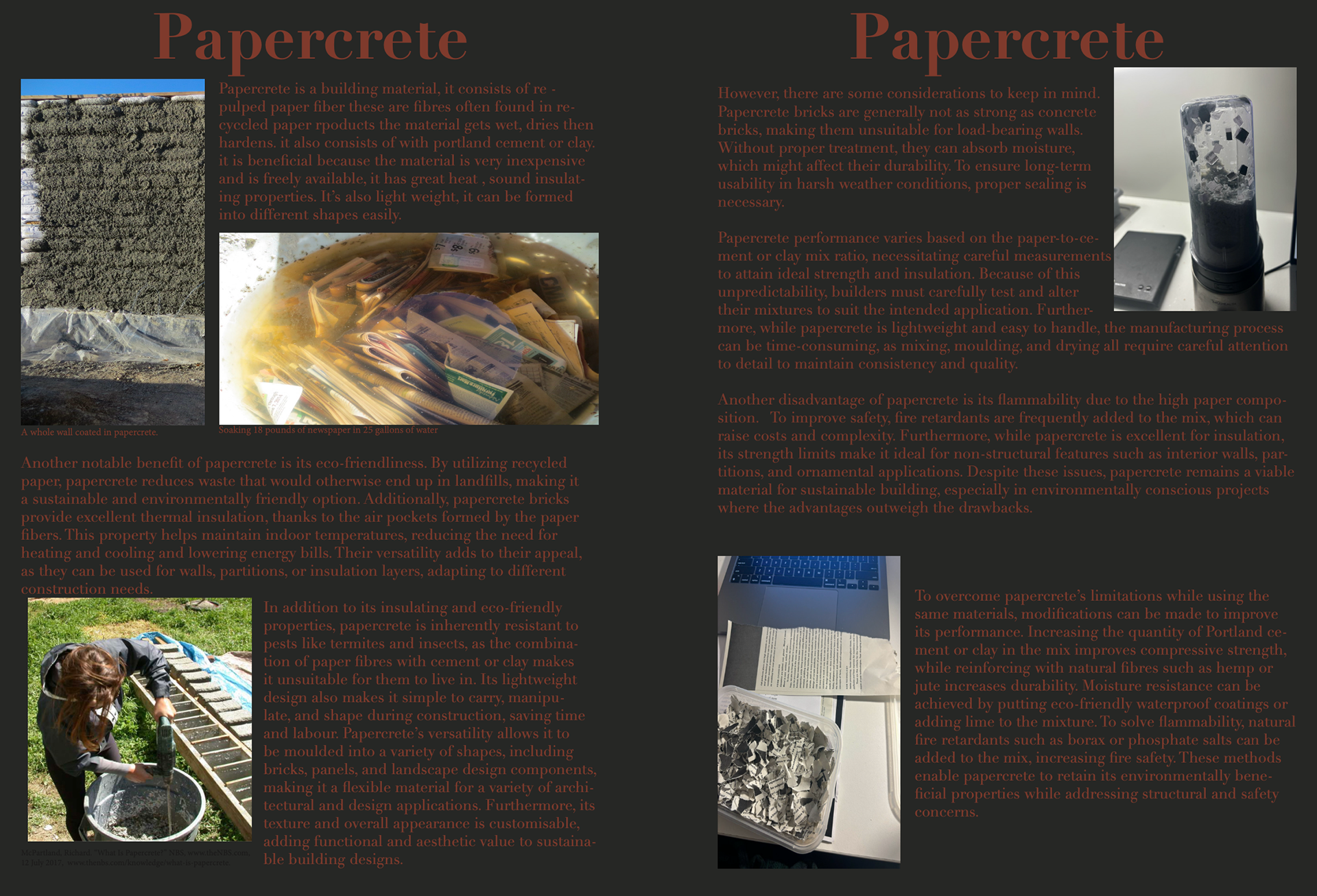
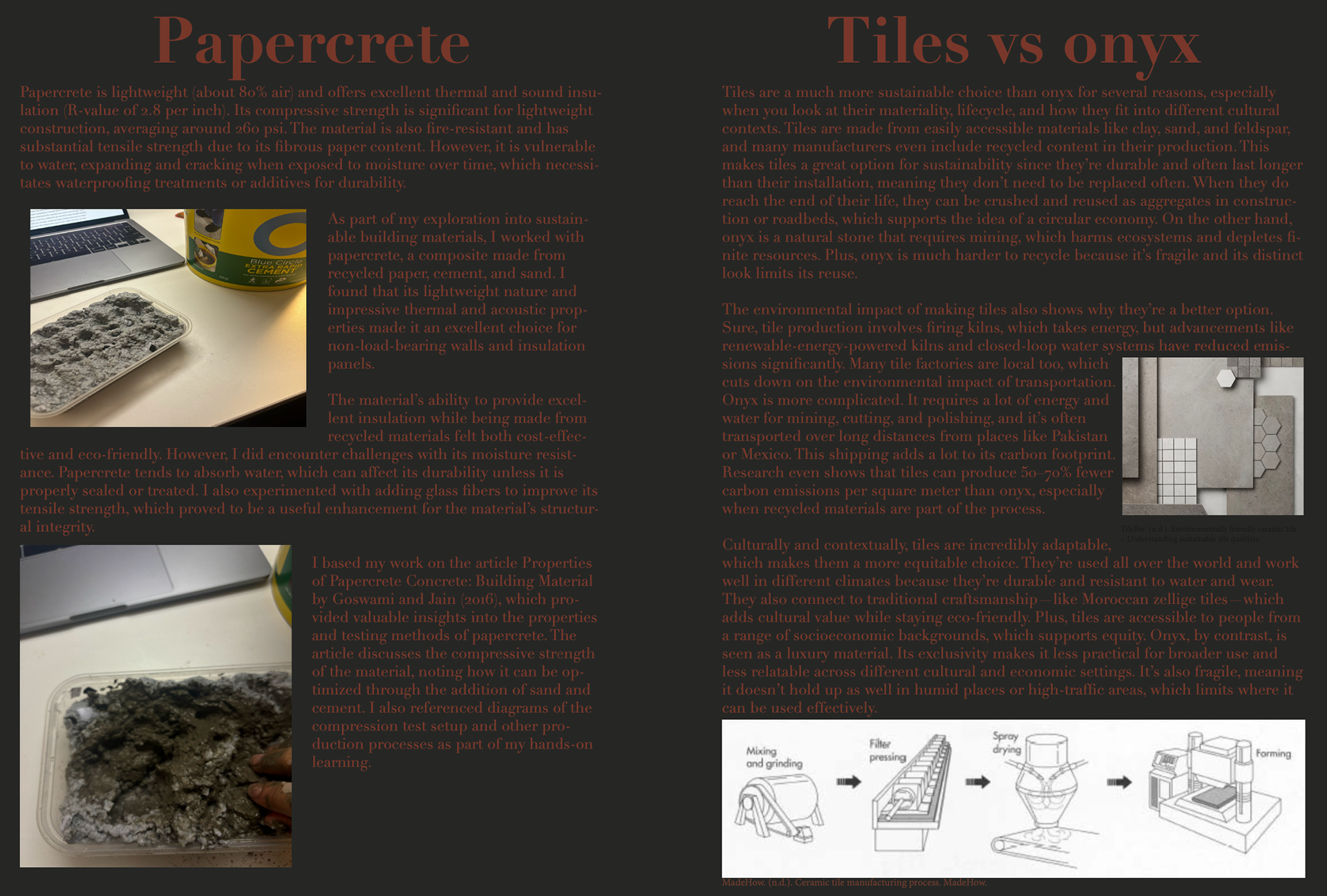
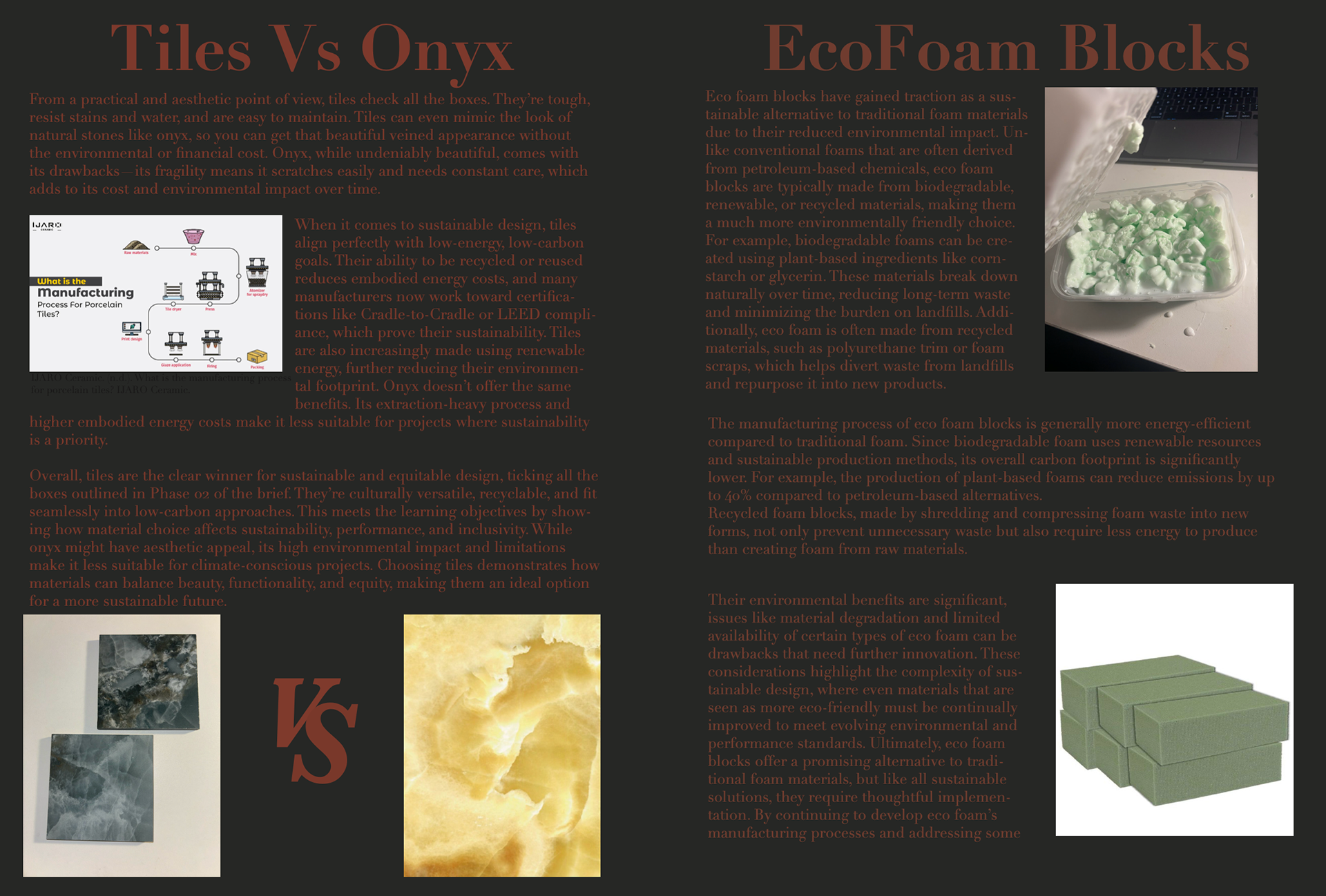
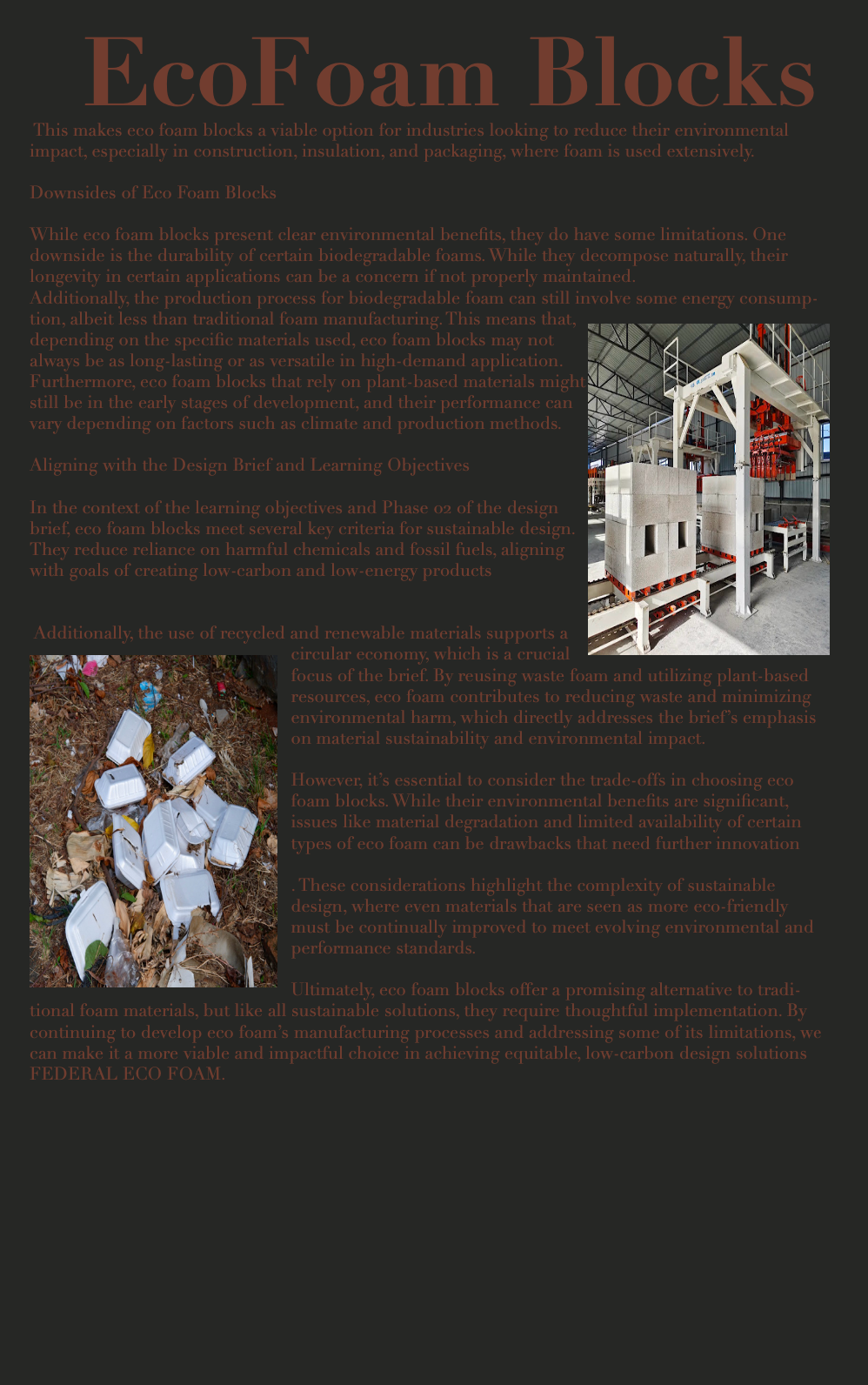
In Phase 02, I looked at eco-friendly material alternatives to help with sustainability. I started with papercrete, a lightweight, eco-friendly alternative to concrete using paper, water, and cement. This chemical recycles waste paper, thus reducing landfill contributions. Next, I compared tiles and onyx and focused on their environmental impacts. Onyx uses intensive mining and harms natural ecosystems, whereas modern tile Manufacturing uses recycled materials and energy-efficient methods, making it a more ecologically responsible alternative. Finally, I chose to research eco-foam blocks as an alternative to concrete blocks. These blocks, often made of recycled or plant-based materials, improve insulation, resulting in more energy-efficient structures and a reduced reliance on nonrenewable resources.
Phase 3
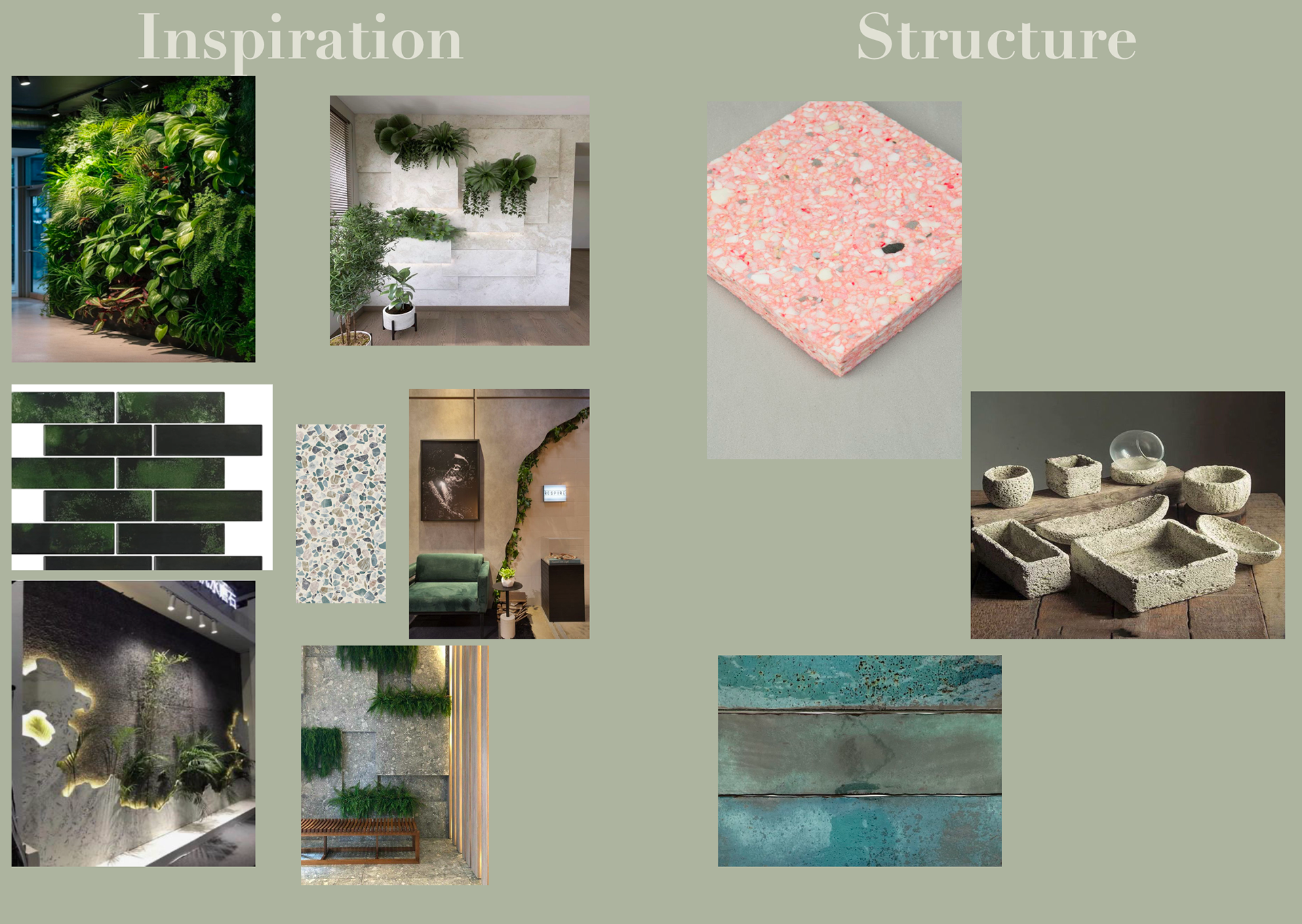
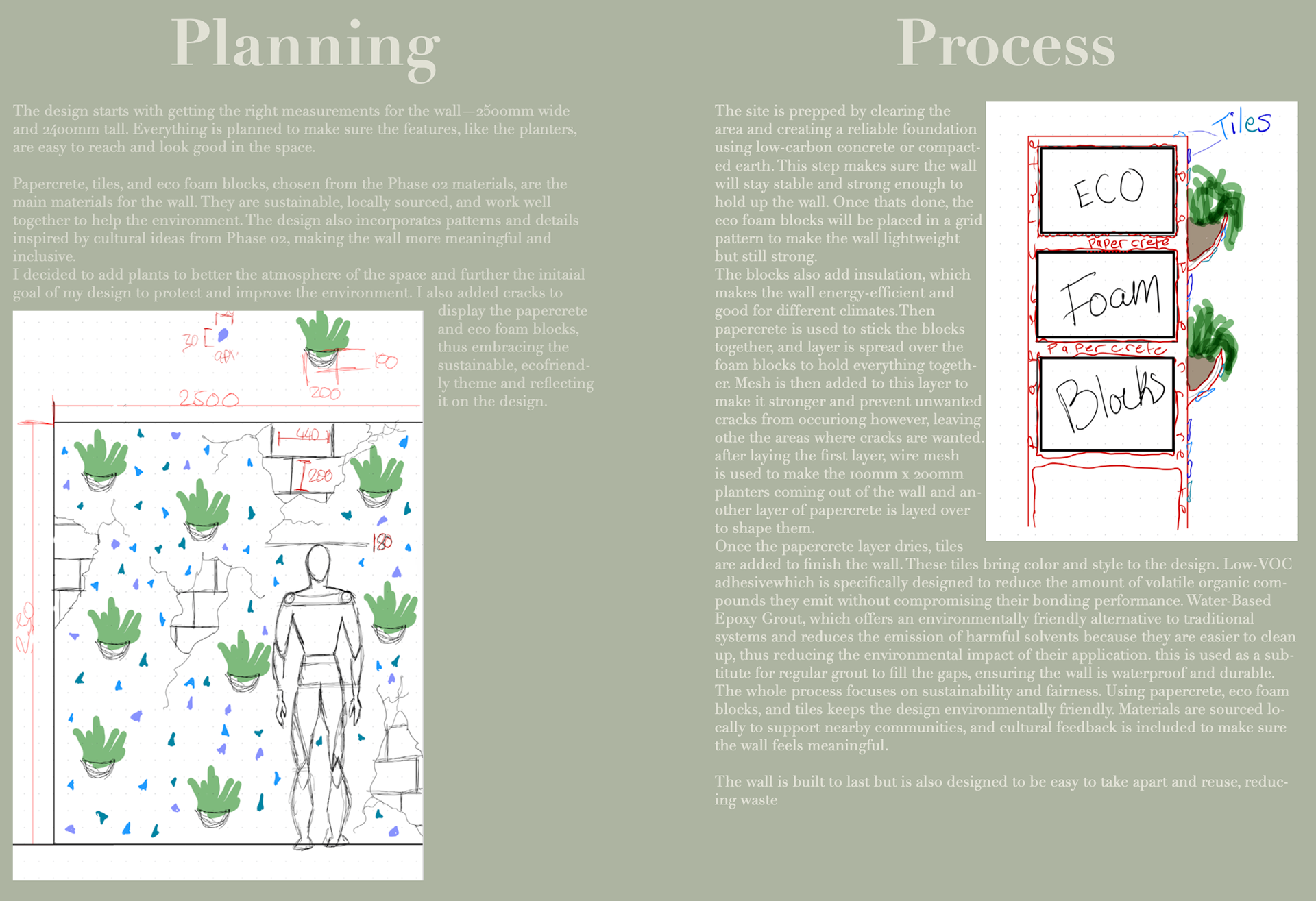
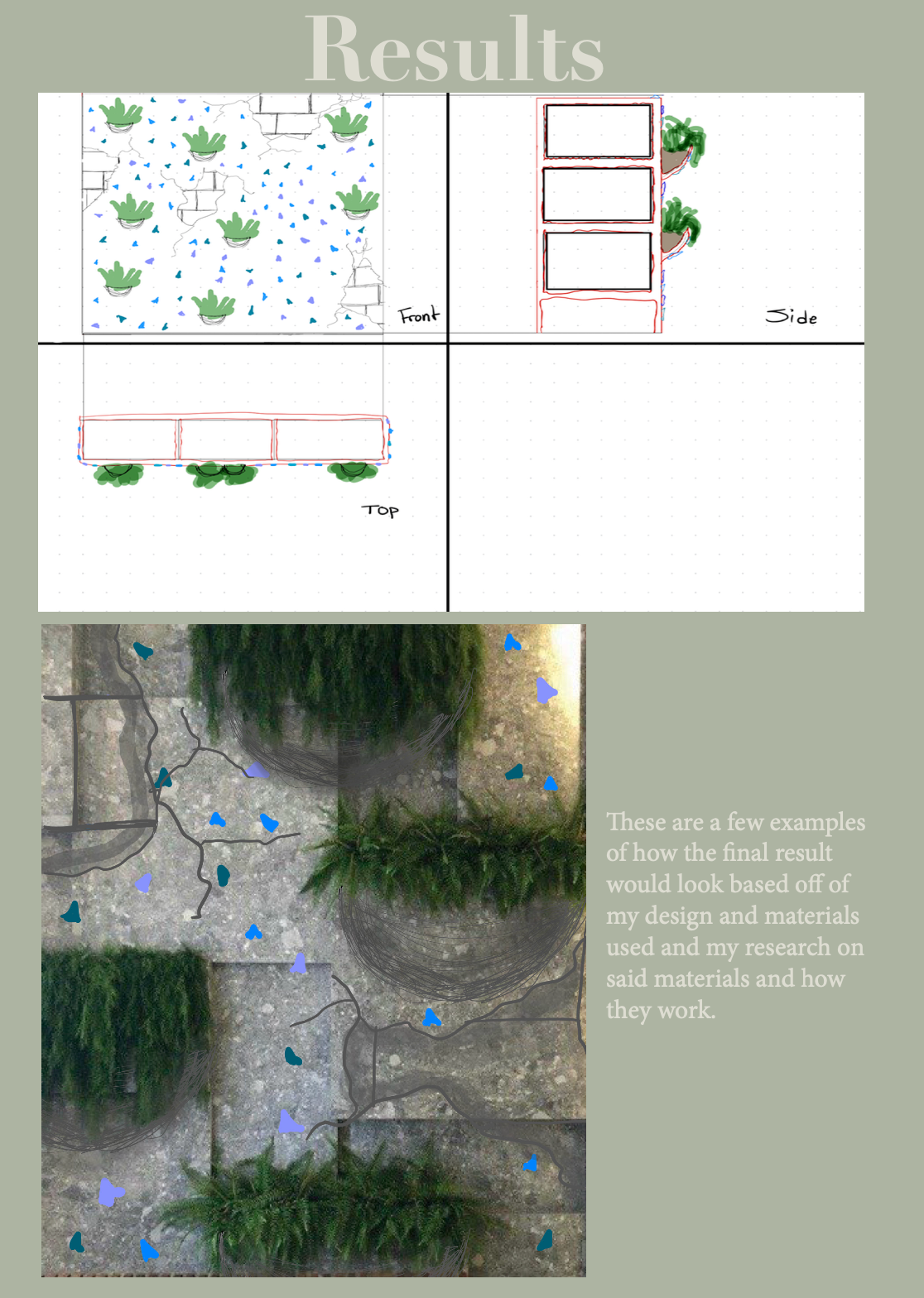
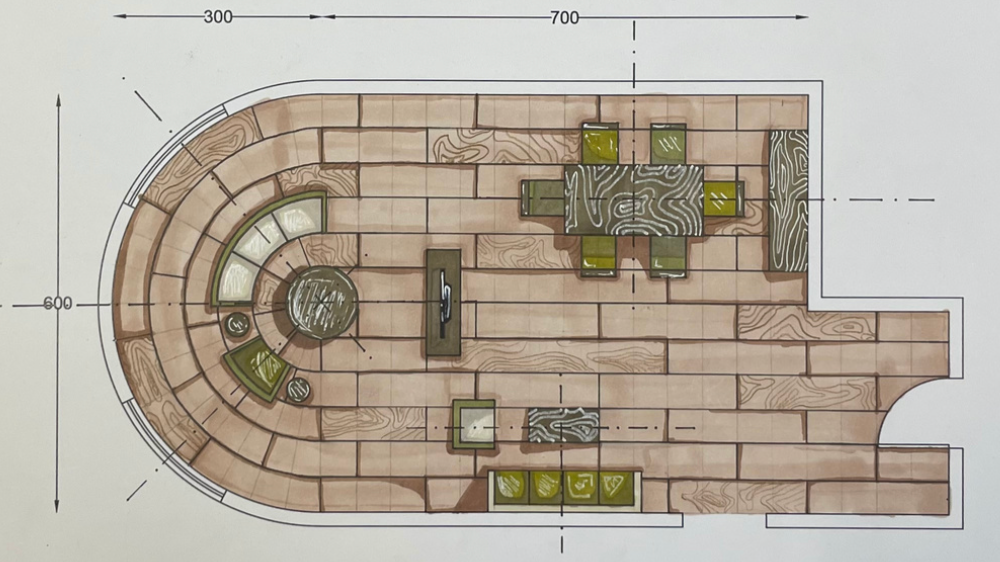
For Phase 03, I decided to deepen my research on interior walls by incorporating the sustainable materials identified in Phase 02 to create a design similar to those developed in Phase 01. Building on my earlier findings, this phase focuses on exploring innovative applications of materials like papercrete, eco- foam blocks, and tiles to craft interior walls that are practical, visually appealing, and environmentally friendly. The goal is to experiment with these materials to find the most effective combinations and techniques that balance functionality, aesthetics, and sustainability. I aim to design an interior wall system that aligns with eco-conscious principles while delivering a polished, modern look by addressing considerations such as thermal insulation, durability, and resource efficiency. This phase is a continuation of my material studies and an opportunity to refine how these sustainable solutions can be integrated into real-world interior design projects.